


 USA
 Canada
 Mexico
 Brazil
 Chile
 Colombia
 Peru
 Panama
 UAE
 Saudi Arabia
 Iraq
 Turkey
 Egypt
 Afghanistan
 Israel
 Oman
 Qatar
 Yemen
 Jordan
 Nigeria
 Ghana
 Côte d’Ivoire
 Kenya
 Uganda
 Tanzania
 DR Congo
 Angola
 South Africa
 Mozambique
 Benin
 UK
 Germany
 France
 Netherlands
 Spain
 Italy
 Belgium
 Poland
 Czechia
 Sweden
 Austria
 Hungary
 Denmark
 Ireland
 Portugal
 Australia
 Shipping from China to Egypt
Reliable China → Egypt freight for importers who need air, sea, express and DDP (door-to-door) with customs support in one place.
Quick Answer: China to Egypt Shipping Costs & Times
Shipping from China to Egypt takes 4–6 days by air to Cairo (about $980 for 100 kg, falling to roughly $7.00/kg at 1,000 kg) and 24–34 days by sea to Alexandria, Damietta or Ain Sokhna (20ft from about $1,880, LCL $130–$190/CBM). DDP door-to-door to Cairo, 10th of Ramadan and Borg El Arab is available.
Egypt is the market where the paperwork decides the delivery date, not the sailing. Every import needs an ACID number issued on Nafeza before the cargo leaves China — sea since October 2021, air since 1 January 2026 — and the supplier has to file documents on CargoX under that number. Cargo that arrives without the ACID on the bill of lading or the air waybill is refused entry and returned at the shipper's cost.
Choose the Best Shipping Method to Egypt
Compare by speed, cost, cargo size and customs needs — then pick the option that fits.
Air Freight
Best for: Electronics, spare parts, garment trims, cosmetics, medical supplies.
Transit time: 4–6 days to Cairo (CAI), 5–7 days from Shenzhen.
Cost guide: From about $980 for 100 kg; roughly $7.00/kg at 1,000 kg.
✅ Choose this if: The deadline or the unit value justifies the premium.
Sea Freight (FCL/LCL)
Best for: Furniture, tiles and sanitaryware, machinery, textiles, packaging, solar equipment.
Transit time: 24–34 days to Alexandria, Damietta, Port Said or Ain Sokhna.
Cost guide: 20ft from about $1,880; LCL $130–$190/CBM.
✅ Choose this if: Volume matters more than speed — which is most Egyptian imports.
DDP
Best for: Buyers who want duty, 14% VAT, ACID filing and GOEIC inspection inside one price.
Transit time: DDP air 6–9 days; DDP sea 30–42 days.
Cost guide: All-in pricing by route and product.
✅ Choose this if: You are not registered on GOEIC's Importers Register, or you want one landed cost at the Egyptian door.
Express
Best for: Samples, documents and parcels inside the ACI exemption limits.
Transit time: 3–6 days door-to-door.
Cost guide: Discounted courier rates.
✅ Choose this if: The shipment is under 50 kg and US$2,000 — above either limit it becomes a normal air import.
Air Freight from China to Egypt (2026 Reference Rates)
Reference air cargo rates by weight break on popular routes. Final quotes depend on exact weight, volume, season and airline space.
| Route | Transit | 100kg | 300kg | 500kg | 1000kg |
|---|---|---|---|---|---|
| Shanghai (PVG) → Cairo (CAI) | 4–6 days | $980–$1,320 | $2,380–$3,220 | $3,760–$5,080 | $6,980–$9,440 |
| Guangzhou (CAN) → Cairo (CAI) | 4–6 days | $1,020–$1,360 | $2,460–$3,340 | $3,880–$5,240 | $7,200–$9,740 |
| Shenzhen (SZX) → Cairo (CAI) | 5–7 days | $1,060–$1,400 | $2,560–$3,460 | $4,040–$5,460 | $7,500–$10,140 |
✈️ What moves your air rate on this lane
- Cairo (CAI) takes almost all air cargo into Egypt; Alexandria (HBE) and Sharm el-Sheikh carry very little freight, so a quote to Alexandria usually still flies into CAI and moves by truck.
- Air cargo has been inside the ACI system since 1 January 2026. The ACID must be requested at least 8 hours before departure and entered in the OCI field of the air waybill; the waybill itself can be uploaded to CargoX after departure.
- Chargeable weight is the higher of gross and volumetric weight (L×W×H cm ÷ 6,000); light garments and packaging are billed on volume.
- Lithium batteries need UN38.3 reports and are restricted on some carriers; confirm acceptance before the goods leave the factory.
- Regulated categories (cosmetics, food, textiles, appliances) can be stopped at the airport for a GOEIC conformity check even when the documents are complete.
Surcharges: fuel and peak-season surcharges can move rates 10–25% in Q4. Rates above are estimates — use our Freight Cost Calculator for a quick quote.
Sea Freight from China to Egypt (2026 Reference Rates)
FCL (full container) and LCL (per CBM) reference rates on major lanes:
| Route | Transit | 20ft FCL | 40ft FCL | LCL / CBM |
|---|---|---|---|---|
| Shanghai → Alexandria | 26–33 days | $1,950–$2,650 | $3,600–$4,500 | $135–$190/CBM |
| Ningbo → Ain Sokhna | 24–31 days | $1,880–$2,560 | $3,480–$4,360 | $130–$185/CBM |
| Shenzhen → Damietta | 26–34 days | $2,000–$2,700 | $3,650–$4,560 | $140–$195/CBM |
🌊 Sea freight essentials on this lane
- Ain Sokhna is the shortest inland leg to Cairo's industrial belt — about 120 km, and next door to the TEDA zone. Alexandria and Dekheila serve the Delta: textiles, food processing and the consumer trade.
- Damietta is the furniture and textile port of the north-east; Port Said East handles the eastern Delta and transshipment traffic.
- Carriers have been moving services back to the Suez Canal through 2026 after almost three years of Cape of Good Hope routings. Confirm the routing per booking — a Cape routing adds seven to fifteen days.
- Free time on dry containers in Egypt is short, typically 5–6 days from discharge. Once an inspection or a document query stops the release, storage and demurrage climb daily.
- The ACID data has to be on Nafeza at least 48 hours before the vessel sails. Amendments after that are possible but they re-open the file and the vessel will not wait.
Surcharges: BAF (bunker adjustment) and PSS (peak season surcharge) move with fuel and demand — our quotes are all-in and itemized.
DDP Shipping from China to Egypt
DDP to Egypt includes pickup in China, freight, ACID filing on Nafeza through our Egyptian partner, CargoX document handling, customs brokerage, duty, 14% VAT, GOEIC inspection attendance and delivery. Egyptian customs requires the importer of record to be on the GOEIC Importers Register; where the buyer is not registered we clear under our Egyptian importer account and invoice the landed cost as one price.
🧠 DDP on the Egypt lane — what we've learned
- Duty, not freight, decides the landed cost. Machinery and production equipment sit at 0–5%, most consumer goods at 30–60%, cars and luxury items up to 135%. The same container can be affordable or unsellable depending on the tariff line, so the HS code is checked before the purchase order, not after.
- VAT at 14% is charged on the CIF value plus duty at clearance, in Egyptian pounds. A VAT-registered Egyptian buyer deducts it in a monthly return; a private importer or an unregistered company simply absorbs it, which is why DDP quotes to Egypt are usually 14–20% above the freight-plus-duty figure.
- GOEIC factory registration is the quietest killer on this lane. For regulated categories the Chinese factory — not just the goods — has to be registered under Decrees 43/2016 and 44/2016 before a shipment is accepted. Registration is done once but it takes weeks, so a new supplier should start it the day the first order is confirmed.
- Egypt has no de minimis for commercial imports: duty and VAT apply from the first pound. E-commerce sellers therefore consolidate and clear as commercial consignments rather than pushing single parcels through courier channels.
- Payment is the other half of the route. Documentary credit and part-advance terms are common because of dollar availability, and duties are settled in Egyptian pounds at the customs rate. We quote in US dollars and confirm the payment route before booking.
📦 What's included in our DDP service
- Pickup from your supplier — any city in China
- Export customs clearance and consolidation at our warehouse
- International air or sea freight on the confirmed schedule
- Egypt customs clearance with duties and taxes handled
- Duties and taxes prepaid per the agreed terms — no surprises at arrival
- Final delivery to your door — warehouse, shop or home, nationwide
🛣️ How a DDP shipment actually flows
- Confirm the supplier, the HS code and whether the product needs GOEIC factory registration.
- The Egyptian importer registers the shipment on Nafeza and the 19-digit ACID is issued — 48 hours before sailing, 8 hours before a flight.
- We file the ACI envelope on CargoX with the commercial invoice, Nafeza invoice file, packing list, certificate of origin and the bill of lading or air waybill carrying the ACID.
- Booking is confirmed with a carrier that accepts the ACID on the bill of lading; export declaration and loading in China.
- On arrival the broker files on Nafeza, duty and 14% VAT are paid in EGP, and GOEIC inspects if the shipment is selected.
- Release and delivery to Cairo, 10th of Ramadan, Borg El Arab, Alexandria or the Delta.
Major Ports in Egypt: Key Gateways from China
Most sea shipments from China arrive through the gateways below. Choosing the right arrival port can save hundreds of dollars per container on inland trucking — we route every FCL quote through the most cost-effective gateway for your delivery address.
| Port / Hub | Transit from China | Why it matters | Best for |
|---|---|---|---|
| Ain Sokhna (Red Sea) | 24–31 days | The shortest inland leg to Cairo, about 120 km, and the port of the TEDA industrial zone; a new Hutchison and COSCO terminal is expanding capacity and adding rail. | FCL and LCL for Cairo, 10th of Ramadan, Suez and the industrial zones. |
| Alexandria / Dekheila | 26–33 days | Egypt's traditional container gateway, serving the Delta and the textile and food-processing belt; Dekheila takes the larger vessels. | FCL for Alexandria, Beheira, Gharbia and the Delta. |
| Damietta | 26–34 days | The furniture and textile port of the north-east, with a large furniture cluster inland at Damietta and New Damietta. | Furniture, textiles and wood-based cargo. |
| Port Said East | 25–33 days | Canal-zone port with free-zone status, handling eastern Delta cargo and transshipment. | Cargo for Ismailia, Sharqia and free-zone operators. |
| Cairo (CAI) air | 4–7 days | The country's only significant air cargo gateway, with direct and connecting capacity from Shanghai, Guangzhou and Shenzhen. | Electronics, garment trims, cosmetics and urgent commercial cargo. |
Customs & Documents: Importing to Egypt
Egyptian clearance runs on two linked platforms — Nafeza for the Egyptian importer and CargoX for the foreign supplier — under the ACI system. The declaration itself is standard; the delays come from ACID data that does not match the documents, from GOEIC inspection, and from the short free time at the port.
📋 The Egypt clearance process
- Confirm the importer is on the GOEIC Importers Register and, for regulated goods, that the Chinese factory is registered under Decree 43/2016.
- Classify the goods to the Egyptian 12-digit tariff line and check the duty rate, any table tax and whether a GOEIC certificate applies.
- The importer files the shipment on Nafeza and receives the 19-digit ACID — 48 hours before sailing, 8 hours before departure for air.
- We upload the ACI envelope on CargoX: commercial invoice in PDF and Nafeza Excel format, packing list, certificate of origin, and the bill of lading or air waybill carrying the ACID.
- The carrier loads only with the ACID on the transport document. On arrival the broker lodges the declaration on Nafeza and pays duty and 14% VAT in Egyptian pounds.
- GOEIC inspects and samples where the shipment is selected, then the release order is issued and the container moves inland.
📄 Documents checklist
- Commercial invoice carrying the ACID, HS codes and the importer's tax ID
- Invoice in Nafeza XML/Excel format (not a scan of a printed invoice)
- Packing list
- Certificate of origin
- Bill of lading or air waybill with the ACID in the OCI field
- CargoX filing under the ACID from a verified exporter account
- GOEIC registration or conformity certificate for regulated products
- Arabic label artwork with importer details (food, cosmetics, textiles, appliances)
Import Regulations & Certifications for Egypt
What must be in place before your goods can clear Egypt customs — the certificates and registrations first-time importers most often miss:
| Regulation / Certificate | What you need to know |
|---|---|
| ACI / ACID (Nafeza) | Mandatory for every sea import since October 2021 and every air import since 1 January 2026. The 19-digit ACID must be on the invoice, packing list, certificate of origin and transport document. |
| CargoX exporter registration | Foreign suppliers and origin forwarders must hold a verified CargoX account to file the ACI envelope; document transfers are charged in units per document. |
| GOEIC Importers Register | The Egyptian importer of record must be registered with GOEIC; under DDP we clear under our Egyptian importer account. |
| GOEIC factory registration | Decrees 43/2016 and 44/2016 require the foreign factory to be registered for regulated categories before shipment — food, cosmetics, textiles, home appliances, toys, ceramics and others. |
| EOS standards and conformity | Imported goods must meet the applicable Egyptian standard (about 5,000 are mandatory technical regulations); GOEIC inspects and may sample at the port. |
| VAT 14% | Charged on the CIF value plus duty at clearance, paid in EGP; recoverable by VAT-registered Egyptian businesses in the monthly return. |
| Arabic labelling | Food, cosmetics, textiles and household appliances need Arabic labels showing product data and the importer's details. |
| ISPM 15 wood packaging | Wooden pallets and crates must be heat-treated and marked with the IPPC stamp. |
Local Market Insight: What We Know About Shipping to Egypt
China has been Egypt's largest trading partner for fourteen consecutive years — two-way trade reached about $20.8 billion in 2025 and imports from China were close to $10.4 billion in the first half of 2026. The lane runs overwhelmingly one way, which is why space is rarely the problem and clearance capacity almost always is.
The China-Egypt TEDA zone at Ain Sokhna has more than 200 companies, over $4.7 billion of cumulative investment and 10.3 square kilometres of built industrial land, making fibreglass, tyres, ductile iron pipe, PV modules and battery systems. It created a second flow on this lane: components and equipment in from China, finished goods out through the same port.
Ain Sokhna is being rebuilt as the country's main box gateway. The Hutchison and COSCO terminal project adds 23 km of quay at 18 metres depth, a rail link into the Sokhna–El Alamein high-speed line and a four-lane access road, which pulls cargo away from Alexandria for anything east of the Nile.
The tariff schedule is deliberately protectionist and it is not uniform: production machinery enters at 0–5% while finished consumer goods pay 30–60%. Importers who ship the same product in knock-down form and assemble locally can halve their duty burden — but only if the classification is defensible, which is why we check the tariff line before the order is placed.
The Egyptian pound and dollar availability set the rhythm of the market. When FX tightens, buyers switch from season-long stocking to smaller, more frequent orders, and air and LCL share rises while FCL falls. Watching the currency tells you more about next quarter's bookings than watching freight rates.
Ramadan and Eid compress working hours at the ports and at GOEIC, then the market restocks hard afterwards. A container arriving in the last ten days of Ramadan often clears a week later than the schedule suggests.
🧑💼 Who imports from China to Egypt?
- FMCG, household goods and DIY distributors supplying Cairo, Giza and the Delta.
- Textile and garment manufacturers importing Chinese fabric, trims and spare parts.
- Industrial buyers inside the TEDA and SCZone parks sourcing machinery, PV modules and battery components.
- Online sellers using air or LCL in GOEIC-registered categories, mostly cosmetics, small appliances and accessories.
Seasonal Shipping Calendar — Egypt
When to book, what to expect — the real seasonality of the Egypt lane:
Hidden Costs & Common Pitfalls When Shipping to Egypt
The charges and traps that show up after the quote — and how we make sure they don't show up on your invoice:
- Storage and demurrage: free time is only 5–6 days on dry containers, so an inspection or an ACID mismatch turns into a daily charge very quickly.
- ACID amendments: correcting a file means a new CargoX envelope and document fees, and the vessel does not wait for corrections.
- GOEIC sampling: laboratory testing is charged to the importer and can hold a shipment for a week or more.
- FX on duty: duty and VAT are paid in Egyptian pounds at the customs rate, so a weaker pound raises the landed cost after the invoice is agreed.
- Table tax and development fee: several consumer categories carry charges on top of the headline duty rate, and they appear only on the final assessment.
- Returned cargo: a shipment that arrives without a valid ACID is refused entry and returned at the shipper's expense — the most expensive mistake on this lane.
Ports & Inland Logistics: The Ground Reality
- Ain Sokhna: fastest to Cairo and the growth port — but the new terminal means berth and gate arrangements change, so confirm which terminal your booking actually names.
- Alexandria and Dekheila: deep Delta coverage and the densest broker network, at the cost of congestion and short free time.
- Damietta: quiet for containers, strong for furniture and textiles; the inland leg to Cairo is longer than Sokhna's.
- Cairo (CAI): everything urgent lands here, and the airport warehouse can hold a shipment for days if a GOEIC certificate is missing.
- Inland: Cairo and Giza are same-day from Sokhna and next-day from Alexandria; Upper Egypt adds one to two days of trucking.
Importing to Egypt: Key Things to Know
- ACI/ACID is mandatory for all sea imports since October 2021 and for all air imports since 1 January 2026. The number is 19 digits, valid for six months, and must appear on the invoice, packing list, certificate of origin and bill of lading or air waybill.
- Customs duty is charged on the CIF value at rates from 0% to 60% for ordinary goods, 0–5% for industrial machinery and 10–20% for trucks and heavy equipment; passenger cars and luxury goods run to 135%.
- VAT is 14% on the CIF value plus duty (5% for machinery and equipment used in production). There is no de minimis threshold, so every commercial import pays.
- The importer of record must be registered on GOEIC's Importers Register, and regulated product categories need the foreign factory registered with GOEIC before shipment.
- GOEIC inspects imports against Egyptian standards issued by EOS — roughly 8,500 standards, of which about 5,000 are mandatory technical regulations, most of them aligned with ISO, EN or Codex.
- Certain goods carry a table tax or excise on top of the duty — tobacco, alcohol, some consumer categories — and a development fee applies to part of the tariff schedule.
- Food, cosmetics, textiles and household appliances need Arabic labelling with importer details; wood packaging must be ISPM 15 heat-treated and marked.
- Courier shipments under 50 kg and US$2,000 are exempt from ACI — above either limit the shipment is treated as a normal air import.
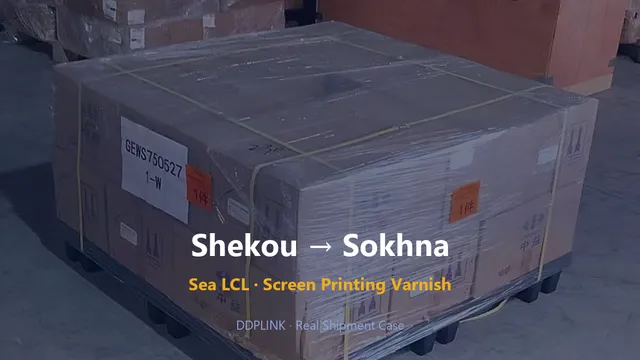
Real shipping cases to Egypt
Actual cargo we've moved from China — routes, transit times and results.
Compare shipping costs to nearby markets


Popular departure cities for Egypt shipments
Pick the city closest to your supplier — rates and local know-how included.