


 USA
 Canada
 Mexico
 Brazil
 Chile
 Colombia
 Peru
 Panama
 UAE
 Saudi Arabia
 Iraq
 Turkey
 Egypt
 Afghanistan
 Israel
 Oman
 Qatar
 Yemen
 Jordan
 Nigeria
 Ghana
 Côte d’Ivoire
 Kenya
 Uganda
 Tanzania
 DR Congo
 Angola
 South Africa
 Mozambique
 Benin
 UK
 Germany
 France
 Netherlands
 Spain
 Italy
 Belgium
 Poland
 Czechia
 Sweden
 Austria
 Hungary
 Denmark
 Ireland
 Portugal
 Australia
 Shipping from China to Qatar
Reliable China → Qatar freight for importers who need air, sea, express and DDP (door-to-door) with customs support in one place.
Quick Answer: China to Qatar Shipping Costs & Times
Shipping from China to Qatar takes 3–6 days by air to Doha (about $960 for 100 kg, roughly $6.80/kg at 1,000 kg) and 20–30 days by sea to Hamad Port (20ft from about $1,520, LCL $110–$160/CBM). DDP door-to-door to Doha, Mesaieed and Al Wakrah is available.
Qatar charges 5% customs duty on most goods and no VAT at all, so the landed cost is easier to predict than in almost any other Gulf market. The constraint is documentation: the commercial invoice and certificate of origin must be attested by the chamber of commerce in the country of origin and by the Qatari embassy, or customs applies a legalisation penalty of 1% of the CIF value with a QAR 500 minimum per document.
Choose the Best Shipping Method to Qatar
Compare by speed, cost, cargo size and customs needs — then pick the option that fits.
Air Freight
Best for: Event equipment, electronics, spare parts, medical and laboratory supplies.
Transit time: 3–5 days to Doha (DOH), 4–6 days from Shenzhen.
Cost guide: From about $960 for 100 kg; roughly $6.80/kg at 1,000 kg.
✅ Choose this if: The goods are project-critical or the value carries the freight.
Sea Freight (FCL/LCL)
Best for: Building materials, steel and aluminium, furniture, machinery, retail fit-out, project cargo.
Transit time: 20–30 days to Hamad Port.
Cost guide: 20ft from about $1,520; LCL $110–$160/CBM.
✅ Choose this if: Volume, weight or construction schedules drive the shipment.
DDP
Best for: Buyers who want duty, attestation, clearance and delivery in one price.
Transit time: DDP air 5–8 days; DDP sea 26–38 days.
Cost guide: All-in pricing by route and product.
✅ Choose this if: You want one landed cost at the Qatari door without holding a customs code yourself.
Express
Best for: Samples, documents and parcels up to 30 kg.
Transit time: 2–5 days door-to-door.
Cost guide: Discounted courier rates.
✅ Choose this if: The shipment is small and urgent, and the value is under the attestation threshold in practice.
Air Freight from China to Qatar (2026 Reference Rates)
Reference air cargo rates by weight break on popular routes. Final quotes depend on exact weight, volume, season and airline space.
| Route | Transit | 100kg | 300kg | 500kg | 1000kg |
|---|---|---|---|---|---|
| Guangzhou (CAN) → Doha (DOH) | 3–5 days | $960–$1,300 | $2,320–$3,160 | $3,660–$4,980 | $6,800–$9,240 |
| Shanghai (PVG) → Doha (DOH) | 3–5 days | $1,000–$1,340 | $2,420–$3,260 | $3,800–$5,120 | $7,050–$9,560 |
| Shenzhen (SZX) → Doha (DOH) | 4–6 days | $1,020–$1,360 | $2,460–$3,300 | $3,860–$5,180 | $7,150–$9,680 |
✈️ What moves your air rate on this lane
- Doha (DOH) is one of the largest cargo airports in the region and the reason air into Qatar is faster and better connected than into most Gulf destinations; belly capacity on passenger flights to Europe and Africa also carries freight onward.
- Chargeable weight is the higher of gross and volumetric weight (L×W×H cm ÷ 6,000); exhibition and fit-out cargo is usually billed on volume.
- Customs may ask for an Arabic translation of the invoice; an invoice without HS codes, unit prices, gross weight and country of origin is rejected at the counter.
- Lithium batteries and dangerous goods need carrier approval and UN38.3 documentation before booking.
- Attestation is the usual bottleneck on air freight: the invoice and certificate of origin have to be stamped before arrival, and re-stamping after arrival costs a penalty.
Surcharges: fuel and peak-season surcharges can move rates 10–25% in Q4. Rates above are estimates — use our Freight Cost Calculator for a quick quote.
Sea Freight from China to Qatar (2026 Reference Rates)
FCL (full container) and LCL (per CBM) reference rates on major lanes:
| Route | Transit | 20ft FCL | 40ft FCL | LCL / CBM |
|---|---|---|---|---|
| Shanghai → Hamad Port | 20–28 days | $1,520–$2,180 | $2,900–$3,850 | $110–$150/CBM |
| Ningbo → Hamad Port | 21–29 days | $1,560–$2,230 | $2,980–$3,940 | $115–$155/CBM |
| Shenzhen → Hamad Port | 22–30 days | $1,600–$2,280 | $3,050–$4,020 | $120–$160/CBM |
🌊 Sea freight essentials on this lane
- Hamad Port replaced Doha Port as the country's container gateway; it is deep enough for the largest Asia services and sits about 40 km south of central Doha, next to the Umm Alhoul free zone.
- Doha Port now handles cruise traffic and small craft; a booking "to Doha" almost always means Hamad Port, so confirm the discharge terminal on the booking confirmation.
- Mesaieed, further south, handles industrial and project cargo, roll-on/roll-off and heavy lift for the industrial city and the southern projects.
- Since the Gulf blockade ended in January 2021, cargo can also enter overland from Saudi Arabia through the Salwa crossing — useful for project sites in the west, slower for Doha itself.
- Free time at Hamad Port is around 7 days on dry containers; storage escalates after that and demurrage is charged per container per day.
Surcharges: BAF (bunker adjustment) and PSS (peak season surcharge) move with fuel and demand — our quotes are all-in and itemized.
DDP Shipping from China to Qatar
DDP to Qatar includes pickup in China, freight, invoice and certificate of origin attestation, customs clearance on Al Nadeeb through our Qatari broker, 5% duty, and delivery to Doha, Al Wakrah, Mesaieed or the industrial area. Because Qatar has no VAT, the all-in price is duty plus logistics and document fees — there is no recoverable tax line to explain afterwards.
🧠 DDP on the Qatar lane — what we've learned
- No VAT changes the DDP arithmetic. In Saudi Arabia or the UAE the tax line dominates the landed cost; in Qatar the same shipment is duty at 5% plus freight, which makes DDP quotes smaller and far easier to defend to a finance department.
- Attestation is the real risk on this lane. Qatari customs accepts the invoice and certificate of origin only when they are stamped by the chamber of commerce where the goods originated and by the Qatari embassy or consulate; if they are not, the legalisation penalty is 1% of the CIF value with a QAR 500 minimum for each document, and third-country attestation is not accepted.
- The invoice format is prescribed in practice: the header must read Commercial Invoice (proforma and shipping invoices are refused), and it must show invoice number and date, HS codes, unit price and currency, total value, number of packages, gross weight matching the air waybill or bill of lading within 5%, Incoterm, mode of transport and country of origin.
- Steel is the exception to the 5% rule — iron and steel bars and sections carry 20%, urea and ammonia 30%, and tobacco, alcohol and pork 100%. Project cargo for construction should be classified before the tender is priced, not after.
- Qatar's import calendar is driven by projects and events rather than by retail seasons: stadium and infrastructure programmes, exhibitions at the Doha Exhibition Centre, and the National Day period in December all pull air and LCL volumes at short notice.
📦 What's included in our DDP service
- Pickup from your supplier — any city in China
- Export customs clearance and consolidation at our warehouse
- International air or sea freight on the confirmed schedule
- Qatar customs clearance with duties and taxes handled
- Duties and taxes prepaid per the agreed terms — no surprises at arrival
- Final delivery to your door — warehouse, shop or home, nationwide
🛣️ How a DDP shipment actually flows
- Confirm the HS code and duty rate, and check whether the category carries a higher rate or needs a conformity certificate.
- Draft the commercial invoice in the prescribed format, with HS codes, gross weight and country of origin, and send it for chamber and embassy attestation early.
- Confirm the Qatari importer's customs code, or clear on ours for DDP, and book with a carrier discharging at Hamad Port or Doha airport.
- Export declaration and loading in China; the certificate of origin is issued against the attested invoice.
- On arrival the Qatari broker lodges the declaration on Al Nadeeb, pays the 5% duty and the Bayan fee, and clears inspection.
- Delivery by truck to Doha, Al Wakrah, Mesaieed or the industrial area, with roll-on/roll-off handling for abnormal loads.
Major Ports in Qatar: Key Gateways from China
Most sea shipments from China arrive through the gateways below. Choosing the right arrival port can save hundreds of dollars per container on inland trucking — we route every FCL quote through the most cost-effective gateway for your delivery address.
| Port / Hub | Transit from China | Why it matters | Best for |
|---|---|---|---|
| Hamad Port (Al Wakrah) | 20–28 days | Qatar's container gateway since 2016, 17 metres of draft with direct Asia calls, adjacent to the Umm Alhoul free zone and about 40 km from central Doha. | FCL and LCL for Doha, Al Wakrah, the industrial area and the free zone. |
| Mesaieed | 21–30 days | Industrial and project port south of Doha, handling roll-on/roll-off, heavy lift and bulk for the industrial city and southern projects. | Project cargo, vehicles, machinery and abnormal loads. |
| Doha Port | Not used for containers | The historic port in the city centre, now dedicated to cruise vessels and small craft; container bookings are discharged at Hamad Port. | Cruise calls and small craft only. |
| Doha (DOH) air | 3–6 days | One of the region's largest cargo airports with year-round capacity to Europe, Africa and Asia, and the main gateway for urgent and high-value cargo. | Electronics, event equipment, spare parts and medical supplies. |
| Salwa land border | 2–4 days from Saudi ports | The overland crossing to Saudi Arabia, reopened in 2021; used for cargo discharged in Dammam or Jebel Ali and trucked into Qatar. | Urgent project cargo and sites in western Qatar. |
Customs & Documents: Importing to Qatar
Qatari clearance is straightforward on paper — a declaration on the Al Nadeeb single window, 5% duty on the CIF value and a Bayan fee — but it depends on documents that must be attested before the cargo arrives. The invoice format is prescribed, and the certificate of origin has to match it line for line.
📋 The Qatar clearance process
- Confirm the importer's commercial registration and customs code, or agree that we clear as importer for DDP.
- Classify the goods under the GCC tariff, checking for the 20% steel rate, 30% urea and ammonia, or 100% alcohol and tobacco lines.
- Prepare the commercial invoice in the prescribed format and obtain chamber of commerce attestation, then Qatari embassy attestation, before shipment.
- Issue the certificate of origin against the attested invoice and keep the invoice number, value and weights consistent across both.
- Book with a carrier discharging at Hamad Port or Doha airport; the broker files the declaration on Al Nadeeb on arrival.
- Pay duty and the Bayan fee, clear inspection where selected, and arrange delivery with the delivery order.
📄 Documents checklist
- Commercial invoice marked Commercial Invoice, with HS codes, unit price, total value and Incoterm
- Certificate of origin issued against the invoice and attested together with it
- Packing list showing packages, gross and net weight
- Bill of lading or air waybill
- Delivery order
- Importer's commercial registration and customs code
- Conformity certificate or approvals for regulated goods
- MSDS for hazardous cargo, ISPM 15 marking on wood packaging
Import Regulations & Certifications for Qatar
What must be in place before your goods can clear Qatar customs — the certificates and registrations first-time importers most often miss:
| Regulation / Certificate | What you need to know |
|---|---|
| GCC common customs tariff | 5% of the CIF value for most goods; higher rates apply to steel (20%), urea and ammonia (30%), records and musical instruments (15%), alcohol, tobacco and pork (100%). |
| No VAT | Qatar has not implemented VAT as of late 2026 and no start date has been published; do not quote a VAT line for Qatar. |
| Invoice and certificate of origin attestation | Both documents must be attested by the chamber of commerce in the country of origin and by the Qatari embassy or consulate; missing attestation attracts a 1% CIF penalty with a QAR 500 minimum per document. |
| Commercial registration and customs code | The importer of record needs a Qatari commercial registration and customs code; declarations are filed through a licensed customs broker on Al Nadeeb. |
| Invoice format | The invoice must be headed Commercial Invoice and show invoice number and date, HS codes, unit price and currency, total value, packages, gross weight, Incoterm, mode and country of origin. |
| Excise tax | Applies to tobacco, energy drinks and special-category goods, and to sweetened drinks since July 2026; collected with customs duty at import. |
| Conformity certificates | Regulated products may need a conformity certificate or prior approval, and customs can request Arabic translations of the commercial documents. |
| ISPM 15 wood packaging | Wooden pallets and crates must be heat-treated and IPPC-stamped. |
Local Market Insight: What We Know About Shipping to Qatar
Qatar is a small market with an outsized import bill: a population of about three million buys infrastructure, equipment and consumer goods at project scale. That makes volumes lumpy — one stadium or one hospital can move more containers through Hamad Port than a whole retail category does in a year.
China is Qatar's largest source of imports and the relationship runs both ways: Qatari LNG moves east under long-term contracts, including the 27-year supply agreement with Sinopec signed in 2022, while Chinese contractors and suppliers deliver construction and fit-out work. The same shipping relationship carries both directions.
Hamad Port is barely a decade old and was built for exactly this traffic — 17 metres of draft, direct Asia calls and an adjacent free zone at Umm Alhoul. The old Doha Port, which handled everything before 2016, now takes cruise ships.
The January 2021 Al Ula declaration ended the blockade of Qatar, and the Salwa land crossing with Saudi Arabia reopened. Overland entry is now a genuine option for project sites in the west and for cargo that cannot wait for a vessel slot, though it adds a customs step at the border.
Working hours, not distance, set delivery dates in summer. From June to September daytime temperatures pass 45°C, outdoor work is restricted at midday, and construction sites take deliveries early morning or at night — a detail that matters when you are promising a project delivery window.
🧑💼 Who imports from China to Qatar?
- Contractors and fit-out companies importing building materials, steel, glass and MEP equipment.
- Retail and hospitality groups sourcing furniture, lighting and kitchen equipment from Guangdong and Zhejiang.
- Trading companies supplying industrial spare parts, tools and safety equipment to the oil and gas service sector.
- Event and exhibition suppliers who need air freight on a fixed date.
Seasonal Shipping Calendar — Qatar
When to book, what to expect — the real seasonality of the Qatar lane:
Hidden Costs & Common Pitfalls When Shipping to Qatar
The charges and traps that show up after the quote — and how we make sure they don't show up on your invoice:
- Attestation penalty: 1% of the CIF value with a QAR 500 minimum per document if the invoice or certificate of origin is not attested — usually more than the attestation itself would have cost.
- Invoice rejections: a proforma invoice, a missing HS code or a gross weight that differs from the bill of lading by more than 5% sends the file back to the origin.
- Storage and demurrage: about 7 free days at Hamad Port, then daily charges while a document or inspection issue is resolved.
- Heavy lift and abnormal loads: escort, permit and night-delivery costs for out-of-gauge project cargo are quoted separately and are not part of the ocean rate.
- Summer delivery windows: night or early-morning site delivery costs more in labour and truck waiting time.
- Arabic translation of documents: requested case by case, and each round adds a day before the broker can file.
Ports & Inland Logistics: The Ground Reality
- Hamad Port: fast, deep and uncongested by regional standards — the delay risk sits in the document file, not the terminal.
- Mesaieed: the only sensible choice for out-of-gauge and roll-on/roll-off cargo, but delivery slots need booking well ahead.
- Doha Port: no longer a container port, despite what some rate quotations still suggest — always check the discharge terminal.
- Doha (DOH): excellent connectivity, and the airport handles attestation and valuation queries through the broker rather than at a separate office.
- Inland: Doha, Al Wakrah and Mesaieed are within an hour of Hamad Port; Al Khor and Ras Laffan add two hours and need delivery windows agreed with the site.
Importing to Qatar: Key Things to Know
- Duty follows the GCC common tariff: 5% of the CIF value for most goods, 15% for records and musical instruments, 20% for iron and steel bars and sections, 30% for urea and ammonia, and 100% for alcohol, tobacco and pork.
- There is no VAT in Qatar as of late 2026. A draft VAT law has been approved by cabinet but not issued, so any quote that shows a Qatari VAT line is wrong.
- Excise applies to tobacco, energy drinks and special-category goods, and since July 2026 to sweetened drinks; it is collected together with customs duty at import.
- The invoice and certificate of origin must be attested by the chamber of commerce in the country of origin and by the Qatari embassy or consulate. Missing attestation attracts a fine of 1% of CIF with a QAR 500 minimum per document.
- The importer needs a commercial registration and a customs code, and declarations are filed by a licensed customs broker through the Al Nadeeb single window.
- Conformity certificates may be requested for regulated products, and the customs office can ask for the foreign invoice and documents to be translated into Arabic.
- There is no de minimis for commercial consignments; the QAR 1,000 exemption applies to personal parcels and mail only.
- Wooden packaging must be ISPM 15 heat-treated and marked, and hazardous goods need the MSDS at booking.
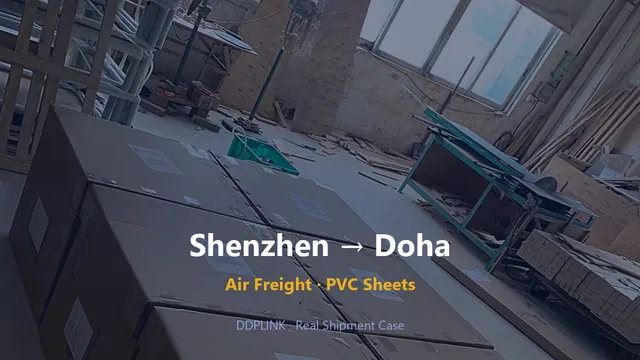
Real shipping cases to Qatar
Actual cargo we've moved from China — routes, transit times and results.
Compare shipping costs to nearby markets


Popular departure cities for Qatar shipments
Pick the city closest to your supplier — rates and local know-how included.